Cancer Equity For All
A Shared Challenge
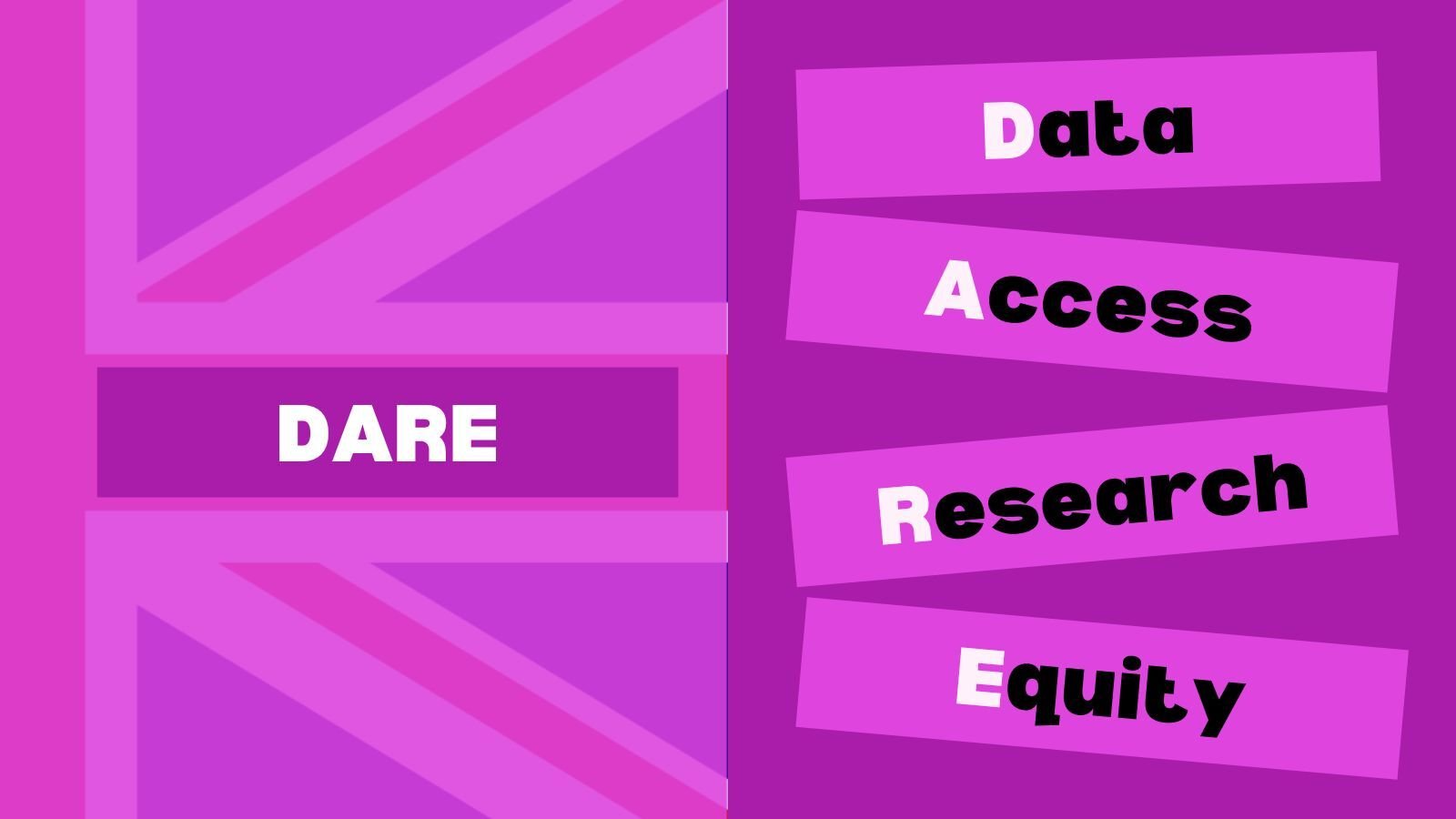
Data equity • Access equity • Research equity • DARE
.jpg?width=1600&height=900&name=dare%20linkedin%2016thfeb2026%20(2).jpg)
.jpg?width=1600&height=900&name=dare%20linkedin%2016thfeb2026%20(3).jpg)
.jpg?width=1600&height=900&name=dare%20linkedin%2016thfeb2026%20(4).jpg)
D.A.R.E.
Ambition is not enough. Delivery requires discipline.
The National Cancer Plan sets a bold direction:
• 75% five-year survival by 2035
• Faster diagnosis and treatment
• Personalised medicine
• Increased research participation
But ambition only delivers when the system works across three connected pillars — held together by one standard.
At the British Asian Cancer Charity, we call this:
DARE:• Data • Access • Research • Equity
• Data must show who is visible and who is missing.
• Access must work for every community, not just the majority.
• Research must reflect the populations innovation is meant to serve.
• Equity is not an add-on. It determines whether each pillar succeeds or fails.
If data is incomplete, inequality stays hidden. If access is uneven, survival gaps remain.
Data
Why the NHS must measure and publish ethnicity-specific performance data.
Precision medicine cannot deliver equity without measurement. The ambitions are clear:
• Precision diagnostics
• Biomarker-driven treatment
• Faster innovation adoption
• Reduced unwarranted variation
• Improved survival and living well
Without ethnicity-specific performance data, we cannot see:
• Who is being tested
• Who is not being tested
• Who is entering clinical trials
• Who is not entering clinical trials
• Who is receiving targeted therapies
• Where unwarranted variation actually sits
If ethnicity recording is weak, and subgroup data on genomics, biomarkers and treatment uptake is not published, then impact cannot be credibly demonstrated — by drug developers, by charities, or by the NHS.
Equity is not a statement of intent. It is a measurement discipline.
Access
You cannot find cancer earlier if some people cannot get help quickly.
The National Cancer Plan is clear:
• More cancers found at Stage I and II
• Fewer emergency diagnoses
• Less inequality
• Better survival
But research shows that people in some communities are still diagnosed later. Often, it is not because they ignore symptoms. It is because:
• They are unsure what the symptoms mean
• They are not confident about contacting services
• They struggle to get a GP appointment
• They do not know what happens next
Earlier diagnosis depends on one simple thing: When someone is worried, can they get timely, trusted access to care?
If they can, cancer is more likely to be found earlier. If they cannot, inequality remains - even if national averages improve.
This is not criticism. It is practical reality.
Equity in early diagnosis means access that works for everyone.
Research
No inclusion in research. No equal future in treatment.
The National Cancer Plan commits to:
• Faster innovation adoption
• Increased clinical trial participation
• Personalised treatment
• Improved survival
We already know that some genetic changes — such as EGFR in lung cancer among Asian never-smokers — occur at different rates in certain populations.
When biology differs, inclusion in research becomes even more important.
Without representative research, we cannot see:
• Whether trials reflect real communities
• Whether genomic data includes diverse populations
• Whether innovation is being shaped by complete evidence
Research today shapes treatment tomorrow.
If research reflects real populations, innovation can reduce inequality.
If it does not, inequality risks becoming embedded in the evidence.
Reality of Health Inequalities
Cancer mortality is 60% higher in England’s most deprived communities compared to affluent areas — driven by a complex mix of social, economic, and healthcare barriers.
Higher rates of emergency admissions
Greater prevalence of long-term conditions, often alongside cancer
Prolonged hospital stays (Length of Stay, LOS)
Higher NHS spending per capita
The Cost of Inequality
How Social Deprivation Drives Poor Health Outcomes
Health inequalities in England are deeply linked to socioeconomic status, ethnicity, and geography. People in the most deprived areas are almost 60% more likely to die from cancer than those in wealthier areas. This inequality is driven by multiple factors, including:
📌 Smoking rates are three times higher in deprived areas, significantly increasing cancer risk.
📌 Obesity is nearly 40% more common in low-income groups due to lack of access to healthy food and exercise facilities.
📌 Limited health literacy delays diagnosis and reduces access to life-saving treatments.
📌 Financial strain forces people to skip medical appointments due to transport costs or problems with taking time off work.
The cost-of-living crisis has worsened these challenges, particularly for socially deprived communities, white working-class populations, ethnic minorities, disabled individuals, neurodiverse people, LGBTQ+ groups, and others facing barriers to care.
Without targeted interventions, these inequalities will continue to widen.
Every 4 minutes, someone in the UK dies from cancer
New UK Cancer Cases (Annual)
375,000 per year | 7,211 per week | 1,027 per day
Cancer Deaths Annually: 167,142
Survival (10+ years): 50%
Preventable Cases: 38%
Annual NHS Cancer Service Costs: £5 billion
The Business Case for Reducing Health Inequalities
The Financial Impact
£5 billion Increased NHS Treatment Costs
£31 billion Productivity Losses
£20 billion Lost Tax Revenue & Higher Welfare Payments

Advancing Cancer Equity for All
Achieving cancer equity begins with knowledge, awareness, and action. We are committed to empowering healthcare and oncology professionals with the tools they need to recognise, address, and reduce disparities in cancer care — and to communicate in an equitable, accessible, and culturally competent way.
Our work focuses exclusively on cancer equity, ensuring that professionals:
✔ Understand the barriers to equitable cancer care and how to overcome them.
✔ Engage meaningfully with underserved and marginalised communities.
✔ Have the right conversations — internally within the NHS and cancer care networks, and externally with patients, the public, and advocacy groups.
✔ Communicate complex cancer information in ways that are clear, inclusive, and accessible — tailored to different literacy levels, cultural contexts, and needs.
By transforming how cancer information is delivered, understood, and acted upon, we are shaping a healthcare system that works for everyone, not just the few.

IMPROVEMENTS MADE
INEQUALITY REMAINS
Despite advances in cancer care, access remains unequal — worsening disparities in survival and patient outcomes.
For patients from underrepresented communities, barriers exist not only in access but in how care is discussed and decisions are made.
To achieve cancer equity for all, the NHS must go beyond representation and actively engage communities where they are, ensuring no one is left behind in the future of personalised cancer care.